
Where Does Recovered Gas Go?

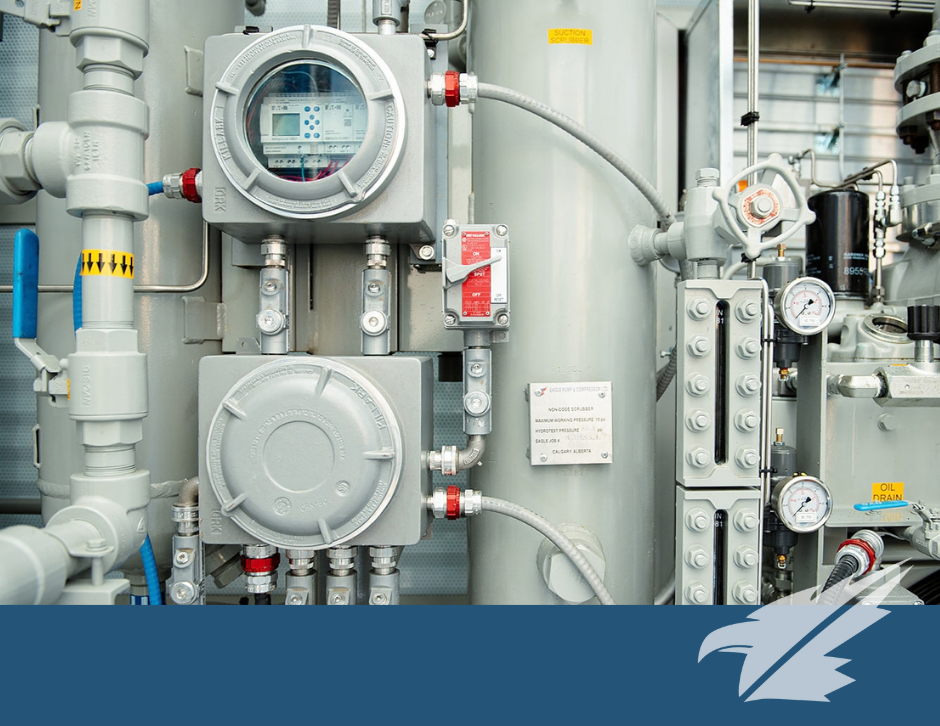
Recovered gas usually goes to one of three places: a gas gathering or sales line, a production compressor for further processing or an on-site fuel system. The right destination depends on the gas composition, the pressure required to deliver it and the infrastructure available at the facility.
A vapour recovery unit draws low-pressure hydrocarbon vapour from a tank or another source. Before compression, the gas passes through a separator that removes condensed liquids. Those liquids are handled separately; the remaining gas is compressed and routed to its intended destination.
Three Common Destinations for Recovered Gas
A gas gathering or sales line.
If a suitable line is available and the recovered gas meets its acceptance requirements, the facility may route the gas into that system. This allows hydrocarbons that would otherwise be lost to enter the gas stream for sale. The package must deliver the gas at the required pressure, and the operator must confirm that the receiving system can accept its composition and flow.
A production compressor.
Recovered vapour can be sent to the suction side of an existing compressor. That compressor then moves the gas onward through the facility’s production system. This may be an option where the vapour recovery package cannot discharge directly into a higher-pressure line but can deliver to a suitable compressor inlet.
An on-site fuel system.
Where the gas is suitable for the equipment and the fuel system can accept it, recovered vapour may be used to help power operations on-site. This requires a review of fuel quality, supply pressure and the amount of gas available. Vapour production can fluctuate, so recovered gas should not be assumed to provide a constant fuel supply.
How Do You Choose the Destination?
Start with what is available at the site. Is there a gathering line, an appropriate compressor suction point or equipment that can use the gas as fuel? Then confirm the receiving system’s pressure and gas-quality requirements against the expected vapour stream.
The source matters, too. Vapour flow may rise during tank filling and fall between transfers. Gas composition can vary, while heavier hydrocarbons may condense as conditions change. A system designed to collect the vapour must also manage those operating changes and the liquids separated from the gas.
Finally, consider what happens when the chosen destination is unavailable. For example, a compressor may be shut down or a receiving line may be unable to accept gas. The facility needs an operating plan for those conditions before the vapour recovery package is installed.
At Eagle Pump & Compressor, we design vapour recovery units for the oil and gas industry around the conditions at each site. Tell us where your vapour comes from and where you intend to send the recovered gas. We can help determine the pressure, capacity and package requirements for that route.


Comments